Doug Insole Articles
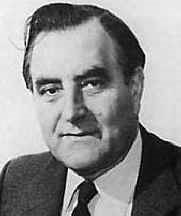
Doug Insole was kind enough to have provided us with articles that were reproduced for the Club's Centenary Yearbook in 1984 and its successor book in 2009.
These articles are reproduced below in full:
From Club Cricket to Test Cricket
The fact that two Chingford players have so far completed the journey from club to test cricket must, I suppose, reflect some considerable credit on the club and I am bound to say that the reputation of Chingford in the war years, when I started playing, was such that my own first appearance in the first team induced a feeling of pride and satisfaction not very dissimilar from that of being selected, several years later, for England.
The jump from school cricket to a regular place in a top class club side was very significant and provided the opportunity of playing with people like Len Parslow, who opened the batting and was a prolific scorer for a British Empire XI which brought together many of the best players from England and the Commonwealth to play weekend matches against representative club sides. It was, at that time, the best team around. Learie Constantine often turned out; Farmer Ray Smith was a regular; Don Spencer, first of Chingford and then of Chelmsford and Essex, also played. It was all quite big-time to a naive young man who had spent most of the war evacuated to Hertfordshire.
The Chingford team was pretty ancient, Fred Cheesewright, Gordon Downes, Jock Harwood, Harold Pryor, Bob Dalton and the rest. Bolstered occasionally by young bloods home from leave. To field at cover point in that side was to have responsibility for the whole of the off side once the ball had gone past a fielder. But, apart from being delightful characters, they gave sound advice. The aforementioned Len Parslow, who was not universally regarded as the easiest man in the team, took me under his wing and in a thoroughly practical, non-technical manner, told me what it was all about.
I was sometimes bewildered by the futility of the cricket when blood matches, particularly I seem to remember with South Woodford and Ilford, produced declarations that meant nothing at all, or over rates that, even in these days of controlled activity on the international scene, would seem pedestrian. Indeed, in the later years, involved as I was in the Test and County game, I seldom came across anything quite so unfriendly as those evenings in the bar when they had set us 130 an hour or, to be fair, when we had done likewise.
My style was never very orthodox, so the scoreboard, and the rate that it was ticking over, was always my best friend. Getting runs against the better club and representative sides was a good grounding for more testing times ahead.
In my first match for Cambridge University, against Yorkshire, I was run out for 44 - a direct hit by Norman Yardley from mid-off, and a diabolical decision - and I must say that I did not find Bill Bowes at Fenners any more difficult to handle than Sid Cousins at Buck Walk (Walthamstow's ground in case it is called anything different now). I always felt nervous before going in to bat, but I don't remember that the waiting was any more agonising at Cambridge than at Chingford. The intensity of my apprehension increased over the years as my responsibility grew.
It is not easy to explain the difference between club and county cricket and between county and Test cricket except where they are obvious. A number of quite average club players have become successful county players, while prolific run-getters and wicket-takers in club cricket have failed dismally when put into county teams. By the same token highly successful county players have failed on the Test scene, although this is more understandable because of the added temperamental difficulties at the highest level. The question of pressure is fundamental, but is not so obvious at county level because county cricket is still quite a friendly game and indeed in my day it was rather more friendly than club cricket.
The modern first class game has become such a specialist occupation that there is much less chance than in my day for the club cricketer to edge his way into the county side as a result of good club performances, as did people like Ron Evans, Harold Faragher and Ron Lynch of Ilford, Sran Eve of Upminster, Allan Lavers of Buckhurst Hill, Arnold Quick of Clacton and Colin Griffiths of Old Brentwoods in the immediate post war years. Which is a pity. But the clubs remain and will always comprise the principal source of talent for the counties and, through them England. As evidenced by the performance, in the past 20 years or so, of Barry Knight from Wanstead, Robin Hobbs from Chingford, Graham Gooch and John Lever from Ilford and Niel Foster from Colchester.
The reduction of the amount of cricket played in schools, and the increase in coaching by clubs , together with the advent of youth teams run by them, is sure to mean that the path from club, to county cricket will continue to be well used in the future. I trust that the next Chingford Test cricketer is en route at this moment.
It’s a Funny Old Game
In essence, the Chingford cricket ground hasn’t changed much since the time, 66 years ago, that I first played on it. It was then what it is now – a square-shaped, sloping field surrounded by residential accommodation, but a jewel none-the-less, and I offer my thanks and congratulations to the group of fellow-members who organised its purchase a few years ago, and to those who have enhanced its appearance in recent times.
The reputation of the Club ranked high in the mid-1930s when, as the scorer for Highams Park, I first came into awesome contact with it and so in 1943, when I returned home after four years of ‘evacuation’ in Herefordshire, I was very happy when my father suggested that I should join. I was 17, working for my ‘A’ levels (Higher Schools) at the Monoux, and playing for the school on Saturday mornings.
Access to the ground was by the ‘passage-way’ that ran up by the side of the Queen Elizabeth. The vast majority of players walked to the ground, carrying sizeable leather cricket bags, either from Chingford station or, more probably, from the Royal Forest Hotel, which was the Bus Terminus for the most popular routes – 34, 38 and 144.
The ‘pavilion’ – a large wooden hut with one cold water wash basin and one electric light bulb in each of the dressing rooms – was at the top end of the ground with its back towards the Queen Liz. The ‘tea hut’, capacity about a dozen, was situated on the boundary in the middle of the ground at the bottom end. There was no bar. Drinking was done in the Queen Elizabeth. Spectator seating was roughly as now, except that there were more benches on the top fence. A lot more spectators turned up then than now. Not surprising, really, as there wasn’t much else to do. No TV, no professional sport. Where else would one go to spend a nice sunny afternoon in the company of buzz bombs and barrage balloons?
At the time of my joining Chingford the call-up age for the Armed Forces had risen to 42. All the regulars in our first team were above that age, or under 18, unless they were in ‘reserved’ occupations. Occasionally we would be reinforced by blokes on leave, but very rarely. There is no doubt that my principal asset was that I could run and throw and, with any luck, catch. The skipper used to wave at the whole of the off-side field and say, “that’s yours”. I used to position myself somewhere around cover point and pursue the ball in all directions.
I remember particularly a quick bowler, Eric Grey, who was in the Navy. He came home on leave one Saturday and announced that he would not be around for quite a while because he was going on convoy escort duty in the North Atlantic. In anticipation of this adventure he had his head shaved to avoid having a hair cut while at sea. Alas, his ship developed engine trouble prior to departure and Eric was sent home on a further week’s leave until the ship was made seaworthy. So he turned out again on the following Saturday and the sight of this shaven-headed monster hurtling down the hill and propelling the ball all over the place has remained sharp in the memory over the years. On that afternoon our ‘keeper took off more often than the Fighter Command planes at North Weald.
Make no mistake, some of the old guys were still very useful performers, and playing with them was very good fun. Jock Harwood, Derek’s dad, for example, was a very canny purveyor of off spin and little away drifters and got a bucket load of wickets. Our best player, however, was not a veteran but a man who had a reserved occupation, the nature of which I never discovered. He was an opening batsman and his name was Len Parslow. He was not regularly available because he became the star player in the British Empire XI, a touring side comprising mostly Test cricketers, often from overseas, like the West Indians Learie Constantine and Dr. ‘Bertie’ Clarke, and pre-war County performers. Len was by some distance the most successful batsman in this formidable team, and most people thought that he would become a star in the County game post-war but, alas, he played just once for Essex, and that was that. He was enormously helpful to me and I enjoyed nothing more than batting with him. Between overs we’d meet in the middle of the pitch and he’d say things like, “Push him square on the off-side. His gully’s too fine and his cover is too straight. Don’t bother calling, I’ll be on my way.” For an aspiring schoolboy cricketer it was great stuff.
The Club’s popularity in club cricket in the 30’s and 40’s owed much to Fred Cheesewright, our wicket-keeper, who in 1932 founded the Chinghoppers. By the time I came into the game he was probably just past his best as a ‘keeper, but as a motivator and team member he was terrific and his attitude to the game was an example to one and all. I think back with great affection to people like Fred, Gordon Downes, Harold Pryor, Jock Harwood, Don Spencer, Cliff Crafer and many others whose names will be unknown to most current Chingford members but whose contributions to the well-being of the club were invaluable. As was that of behind-the scenes men, like Joe Jessop, father of Buddy.
We even had an umpire, Fred Culpin, who was well thought of for his fairness, if not always for his competence. Fred was a large, jovial character who was regarded on the circuit as an umpire, as distinct from an extension of the Chingford side. The fact that he umpired for the Chinghoppers meant that he was known to a lot of players from other teams around the circuit. At that time, umpires were not required to pass any exams involving the Laws of the Game. Having a car was a much more important qualification, although Fred rode a bike – a further indication of how highly he was regarded.
None of the cricket played between clubs was competitive – at least not as far as league points were concerned. There was, however, no lack of rivalry, much of it built up over the years as a result of ‘impossible’ declarations or apparently unsporting actions on the field. The status of a club was judged largely by the quality of its fixture list, and Chingford’s reputation was highly regarded in that respect. We played the top clubs in Essex, but also obtained fixtures against the top Middlesex outfits like Alexandra Park, skippered by the legendary Len Newman who once scored 4138 runs in a season in which he notched up 20 hundreds, Winchmore Hill, Highgate, Edmonton and North Middlesex. ‘Grudge matches’ were played against a couple of ‘local’ sides, in particular, because of their habit of batting on well after tea from a two o’clock start. I was often amazed and amused at the stupidity of it all. Both teams went to the pub after the match and drank in separate corners of the bar. No league match was ever conducted in a more hostile atmosphere. But, strange to say, the fixtures were renewed in the following season, and as far as I know continued until the advent of League cricket.
That I was able to continue playing for Chingford when I was called up for service in the Forces was due entirely to our deputy wicket-keeper, one Reg Smith, who made it possible for me to be free on Saturdays from my duties in the Special communications Unit of the Royal Signals, in which I was intercepting German radio signals as part of the ‘Bletchley Park’ outfit. Reg, it turned out when eventually I saw him in uniform, was involved not with Enigma but with sausage and mash – a much more complicated business. He was Catering Officer for the unit, with the rank of Captain.
Looking back, I often think about the amount of ingenuity and improvisation that was involved in staging cricket matches in the early and mid 1940’s when so many things were in short supply, or simply unobtainable. Fortunately for our club, enthusiasm was not one of them. There were occasions, for example, when there was simply no petrol left in the groundsman’s mower to deal with an outfield that was looking pretty shaggy. Occasionally on the Friday evening prior to a match and on the Saturday morning, half a dozen members, most of them knocking on a bit, would turn up with garden mowers and, in a highly organised operation in which the least disabled among them would collect the cuttings in a sack and dump them in the ditch at the bottom of the ground, they would have the ground looking very respectable and fit for service.
Then there was the question of the new ball. It became the custom for the home team to provide just one, so that a visiting team that wanted to be certain of bowling with one had to bring its own. They were in very short and quite pricey supply and when, in the event, there was only one available for the whole match, which was more often than not, the privilege of bowling with the new ball had to be factored into the whole tricky business of deciding whether to bat or field on winning the toss. There weren’t too many quickies about, but to the wily old seamers, of which there were many, the shine and the seam were of great significance.
It should also be noted that clothing coupons were needed for the purchase of cricket attire, if it was available. The standard of dress was therefore not uniformly high, especially when a bloke came home on leave after a year or so and, having lost a stone or two, tried on his old flannels which may well have been home to the odd moth in the intervening period. The transformation from a smartly dressed commissioned officer to a shambles of a middle order batsman sporting a tie round his waist and wearing grey-coloured pads and boots had its comical side.
Times have changed. Cricket in those war-time years and, indeed, for several years afterwards, was played in a more civilised manner than now. Most batsmen ‘walked’. Not all, but most, and a batsman would much more often than not ask the fieldsman, if there was any doubt, if he had caught the ball cleanly and take his word for it rather than wait for the umpire to adjudicate. There was a feeling of relief throughout the game that life was back on track and that ‘normal service was being resumed’. I was very conscious of this attitude when, in 1947, I began playing County cricket. There were a few sharp operators about but generally speaking everybody was intent on helping out the umpires.
The feeling is perhaps well illustrated by an incident in the Brisbane Test in 1946. England had been caught on an absolute stinker of a wet wicket and despite the fact that Keith Miller, who finished with 7 wickets, was making mincemeat of our batting, Don Bradman suggested that he was not bowling fast enough at Bill Edrich. Keith’s response was to look his captain firmly in the eye and say, “I fought alongside the little bastard all through the war and I don’t intend to kill him now.” There’s no answer to that.
So much for nostalgia. What a simple game it was back then – apart from Body-line, of course, and W. G. fiddling his expenses. It’s not going to get any less complicated from now on, but clubs like Chingford, and particularly Chingford, can look back with pride – and forward in hope – at the way the game has been supported and managed in our part of the world. I hope that there are enough sufficiently enthusiastic and dedicated young people around to see the Club through the next 125 years in equally good shape.